



Diese Seite wurde automatisch mit künstlicher Intelligenz übersetzt. Sie kann veraltete Informationen, Ungenauigkeiten oder Fehler enthalten. Bitte verwenden Sie die englische Seite als Originalversion.
Datum der Übersetzung: 12.10.2026
Development & Community Fund
Haben Sie eine Idee zur Stärkung der Karriereentwicklung oder der Forschungsgemeinschaft an der MUI? Der Community & Development Fund unterstützt von Forschenden geleitete Initiativen wie Arbeitsgruppen, Vortragsreihen, Schreibgruppen oder Austauschformate mit der Industrie. Wissenschaftliches Personal kann sich zweimal jährlich um eine Förderung von bis zu € 3.000 bewerben, um Forschungs- und Karrierekompetenzen zu entwickeln, interne und internationale Verbindungen zu stärken und aktiv zu einer lebendigen Forschungskultur an unserer Universität beizutragen.
Antragstellung
Die Fristen sind der 15. April & 15. September. Alle Informationen finden Sie hier.
Geförderte Projekte

Treten Sie dem Team-Kanal bei, um auf dem Laufenden zu bleiben: MitoLectures
Umfang: Dies ist eine abteilungsübergreifende, von Forschenden geleitete Vortragsreihe, die Experten und Forschende der Mitochondrienbiologie und -pathologie aus den Bereichen Grundlagenforschung, translationale und klinische Forschung zusammenbringt. Die Initiative zielt darauf ab, den Wissensaustausch und die Zusammenarbeit zwischen der Medizinischen Universität Innsbruck, der Leopold-Franzens-Universität und dem Institut für Biomedizin in Südtirol zu stärken. Der Kern der MitME-Initiative ist das Networking – Menschen zusammenzubringen, um sich über mitochondriale Physiologie und Pathophysiologie auszutauschen.
Format: Die Reihe umfasst fünf 60-minütige hybride Seminare (vor Ort und via Livestream). Sie beinhaltet einen Keynote-Vortrag sowie Präsentationen zu verfügbaren und/oder innovativen Methoden und aufkommenden Themen der Mitochondrienforschung, einschließlich potenzieller Fallstricke. Die Themen umfassen mitochondriale Dynamik, Immunmetabolismus, mitochondriale Genetik, Bioenergetik, fortschrittliche Bildgebung, Omics und Stoffwechsel.
Zielgruppe: Postdocs, wissenschaftliches Personal, PhD-Studierende und Kliniker, mit besonderem Fokus auf die Förderung von Networking und Fachwissen zur Mitochondrienbiologie.

Umfang: Ethische und philosophische Debatten innerhalb der Medizin- und Biowissenschaften werden oft vernachlässigt oder auf einen begrenzten Kontext beschränkt, wobei der Schwerpunkt meist auf der unmittelbaren klinischen Patientenversorgung liegt. Wissenschaftliche Forschung prägt unseren Alltag jedoch zunehmend auf tiefgreifende und manchmal unvorhersehbare Weise. Kurz gesagt: Es wächst der Bedarf, sich mit philosophischen Fragen auseinanderzusetzen, die weit über den Labortisch hinausgehen. Fiktion und Kino dienen seit langem als wirkungsvolle Katalysatoren, um Konzepte zu testen und Ideen zu formen; die Übersetzung ihres zugrunde liegenden philosophischen Kerns bleibt jedoch oft mehrdeutig. Wir glauben, dass Forschende, Studierende und die Öffentlichkeit wertvolle Einblicke in aktuelle wissenschaftliche Entwicklungen haben. Um diese Lücke zu schließen, schlagen wir eine vierteilige „Philosophy Film Night“-Reihe vor – eine zugängliche und intuitive Plattform, die dazu anregen soll, tiefergehende Diskussionen über die ethischen und philosophischen Dilemmata der modernen Forschung zu führen.
Format: Jede Sitzung konzentriert sich auf einen Film mit starkem Bezug zu Wissenschaft und Philosophie, der von einem eingeladenen Vortragenden ausgewählt wird.
- Einführung (15 Min.): Ein kurzer einführender Vortrag, der die zentralen philosophischen Themen des Films umrahmt, damit Sie ihn mit einer fokussierten Perspektive betrachten können.
- Filmvorführung: Nach der Einführung wird der ausgewählte Film gezeigt.
- Geführter Dialog: Nach einer kurzen Pause kommen wir zu einem inklusiven, strukturierten Dialog zwischen dem Vortragenden und dem Publikum zusammen.
- Networking & Informeller Austausch: Jeder Abend endet mit leichten Erfrischungen (wie Pizza und Getränken), die einen entspannten Rahmen bieten, um das Gespräch fortzusetzen.
- Dauer: Etwa 3 bis 4 Stunden pro Sitzung, abhängig vom Film und dem Diskussionsverlauf.
Zielgruppe: Bachelor-, Master- und PhD-Studierende. Postdocs & Primary Investigators.

Umfang: Dieses Pilotprojekt ist eine pädiatriespezifische, von Assistenzärzten geleitete Unterstützungs- und Kompetenzreihe, die einen sicheren, strukturierten Raum für den Übergang von der Ausbildung in die eigenständige klinische Praxis schafft. Die Initiative zielt darauf ab, die Onboarding-Lücke für neue Assistenzärzte in der Pädiatrie zu schließen, den kollegialen Austausch, die praktische Problemlösung und die Karriereplanung zu fördern und dadurch Frustration sowie vermeidbare Fehler zu reduzieren. Sie ergänzt bestehende Mentoring- und Buddy-Programme mit bedarfsorientierten, praxisbezogenen Angeboten. Nach einem erfolgreichen Pilotprojekt ist eine Ausweitung auf weitere Kohorten (einschließlich anderer Fachrichtungen) vorgesehen.
Format: Drei bis fünf 60-minütige hybride Sitzungen (vor Ort und via Livestream) pro Semester. Jede Sitzung beinhaltet:
- Einen kurzen Keynote- oder Impulsvortrag (10–15 Min.) zu Kernthemen des Übergangs in die Praxis in der Pädiatrie
- Ein Methoden-Segment (15–20 Min.) mit konkreten Werkzeugen und Arbeitsabläufen aus der Praxis
- Ein moderiertes Peer-to-Peer-Forum (20–30 Min.) für fallbasierte Diskussionen, alltägliche Herausforderungen und gemeinsame Lösungsansätze unter klaren Vertraulichkeitsregeln (Safe Space).
- Bedarfsorientiertes Design: Eine dedizierte E-Mail-Adresse sammelt vorab Themen, Fragen und Anliegen. Ein Team von pädiatrischen Fachärzten kuratiert die Inhalte auf Basis der Einreichungen und moderiert die Sitzungen.
- Die Sitzungen heben zudem bestehende Ressourcen (Mentoring-, Buddy- und Onboarding-Programme) hervor und schließen mit umsetzbaren Handlungsempfehlungen sowie Hinweisen auf weiterführende Unterstützung.
Die Teilnehmenden werden in Kleingruppen organisiert, wobei jeder Gruppe ein Mentor für tägliche Fragen und akute Anliegen zur Seite steht. Ergänzend beinhaltet das Programm Sitzungen mit externen Experten zu Konfliktmanagement, schwierigen Gesprächen und fortgeschrittenen Kommunikationsfähigkeiten.
Zielgruppe: Assistenzärzte der Pädiatrie (Pilotkohorte), optionale Teilnahme interessierter Mentoren/erfahrener Ärzte zur Förderung des Netzwerks und zur Abstimmung mit bestehenden Programmen.
Pilot und Skalierung: Evaluation nach jeder Sitzung (Kurzfeedback) und am Semesterende (Bedarfs- und Wirkungsanalyse).
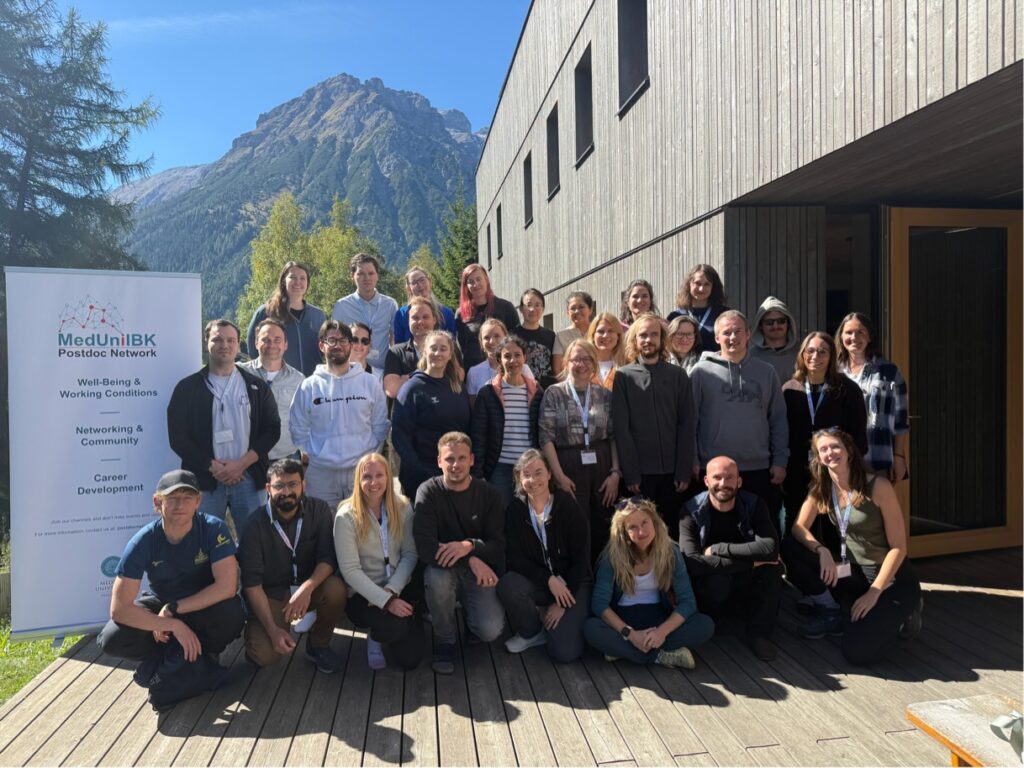
Umfang: Im Rahmen der „Postdoc Appreciation Week 2026“ organisierte das Med Uni Innsbruck Postdoc Network ein gefördertes zweitägiges Retreat in Obernberg. Die Veranstaltung brachte Postdocs aus verschiedenen Fachbereichen zusammen, um in informellem Rahmen Wissen auszutauschen, Erfahrungen zu teilen und ihre beruflichen Netzwerke zu stärken.
Format: Das Retreat kombinierte Lightning Talks, Skill-Sharing, interaktive Workshops, Networking und Outdoor-Aktivitäten. Die Workshops konzentrierten sich auf Wissenschaftskommunikation und Präsentationsfähigkeiten, ergänzt durch eine gemeinsame Schatzsuche und eine Wanderung zum Obernberger See.
Zielgruppe: Postdocs aller Fachrichtungen und Karrierestufen

Historisch und geografisch ist Innsbruck stark mit der Hypoxie-/Höhenforschung verbunden. In den letzten Jahrzehnten begannen Forschende, das Potenzial der Höhe und der damit verbundenen Hypoxie zur Gesundheitsförderung und zur Verlängerung der Lebens- und Gesundheitsspanne systematisch zu untersuchen. So konnte beispielsweise gezeigt werden, dass das Leben in moderaten Höhen (1000 – 2500 m über dem Meeresspiegel) die Sterblichkeit durch Herz-Kreislauf-Erkrankungen und die Gesamtmortalität in Alpenländern wie der Schweiz, Italien und Österreich reduziert.
Große Höhe zeichnet sich durch einen reduzierten barometrischen Druck aus, was zu einer geringeren Sauerstoffverfügbarkeit und inspiratorischer Hypoxie führt. Es gibt zunehmend Belege dafür, dass eine solche inspiratorische Hypoxie (im Labor statt in Bergumgebungen) verschiedene Aspekte des gesunden Alterns und auch der psychischen Gesundheit fördern kann.
Wichtig ist, dass schwere Hypoxie das Altern beschleunigen kann, wie in Zell- und Tiermodellen gezeigt wurde, und das Risiko für altersbedingte Krankheiten erhöht, die oft eng mit Gewebehypoxie verbunden sind. Im Gegensatz dazu induziert milde, kontrollierte Hypoxie protektive physiologische Reaktionen und Anpassungen, die das Risiko für altersbedingte kardiovaskuläre und neuropsychiatrische Erkrankungen verringern.
Hypoxie-Interventionen konnten kürzlich wiederholt nachweisen, dass sie depressive und Angstsymptome reduzieren, kognitive Fähigkeiten und exekutive Funktionen verbessern und den kognitiven Abbau verlangsamen können, insbesondere bei älteren Menschen und solchen mit psychischen Erkrankungen.
Darüber hinaus laufen derzeit wichtige klinische Studien, die das Potenzial therapeutischer Hypoxie bei altersbedingten neurodegenerativen Erkrankungen, wie z.B. bei Morbus Parkinson, sowie bei psychischen Erkrankungen wie Depression untersuchen. Mehrere systematische Reviews bestätigten, dass intermittierende Hypoxie die Gehirngesundheit verbessern und wahrscheinlich die Gehirnalterung verlangsamen kann, obwohl die meisten verfügbaren klinischen Studien klein und häufig nicht adäquat kontrolliert waren.
Um Erfahrungen über therapeutische Anwendungen der Hypoxie zur Förderung der psychischen Gesundheit und des gesunden Gehirnalterns auszutauschen und Bedingungen für die Entwicklung neuer interdisziplinärer und transnationaler Kooperationen zu schaffen, organisieren wir ein „Spearhead-Seminar“. Wir sind stolz darauf, dass Vertreter der wichtigsten europäischen Projekte, die derzeit die Entwicklung der therapeutischen Hypoxieforschung im Kontext des Alterns und der psychischen Gesundheit vorantreiben, Einblicke in ihre faszinierende Forschung geben werden.
Dieses Projekt wurde durch die großzügige Unterstützung des „Development & Community Fund“ der Medizinischen Universität Innsbruck sowie der „Dr. Johannes und Hertha Tuba-Stiftung“ ermöglicht.
Lokales Organisationskomitee: Johannes Burtscher, PhD, Dr. Julia Schneider, Dr. Evelyn Romina Pircher Noeckler, Prof. Katharina Hüfner – Psychiatrie II, Medizinische Universität Innsbruck, Österreich
Veranstaltungsort: Medizinische Universität Innsbruck (Hörsaal der Psychiatrie, Haus 6)
Datum: 22. Oktober 2026
Das Programm finden Sie hier.