


Recognition, Representation and Information: The Med Uni Innsbruck Postdoc Network
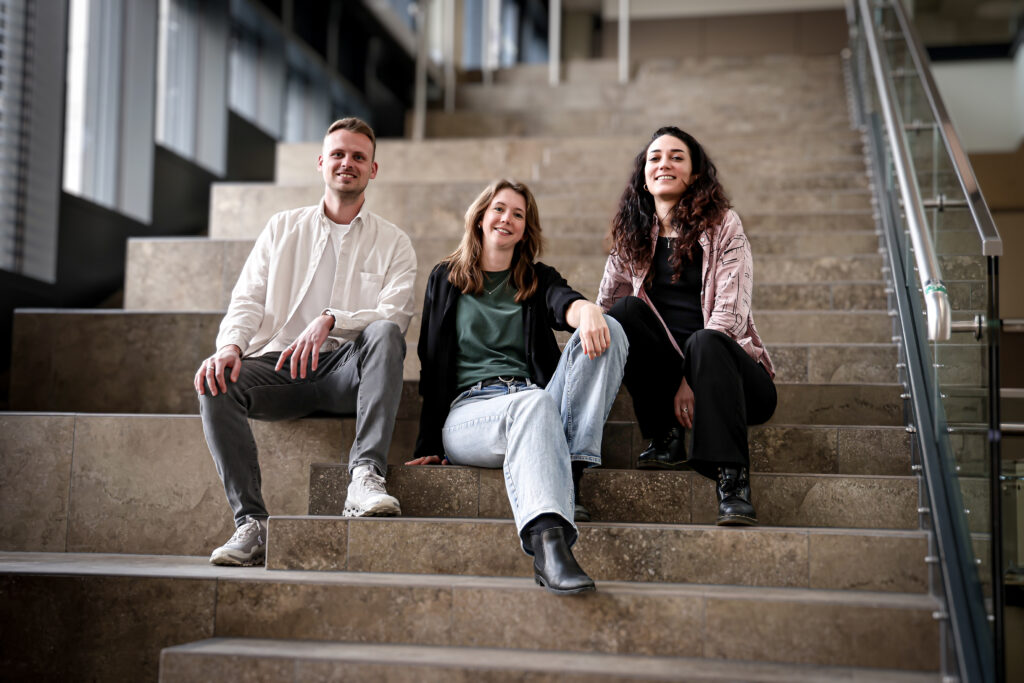
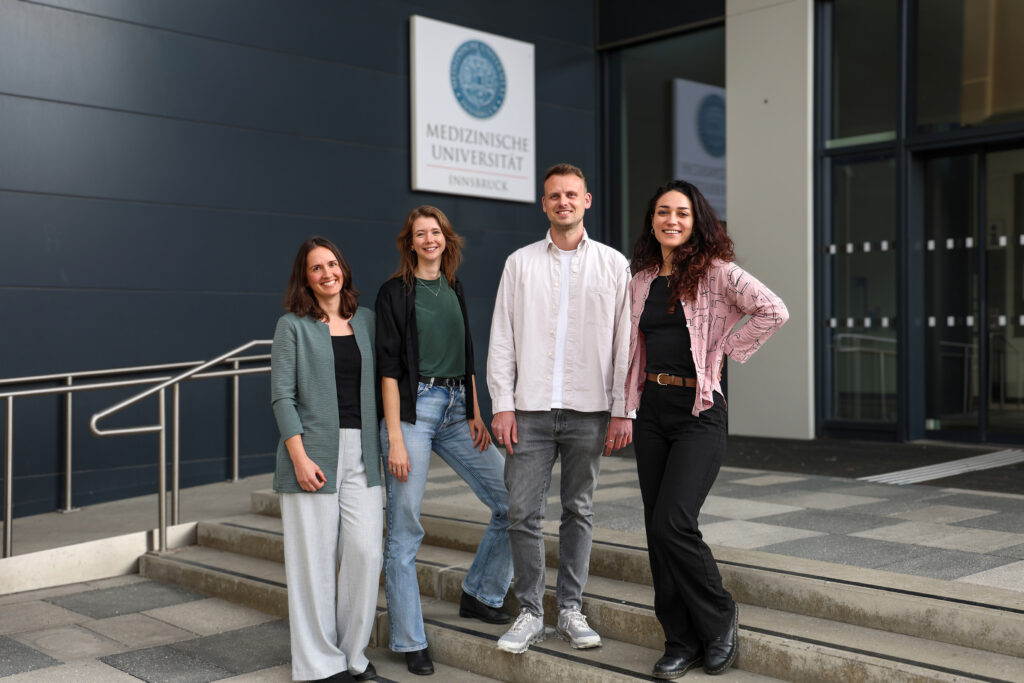
Founded in autumn 2025, the “Med Uni Innsbruck Postdoc Network” is beginning to take shape. Through community meetings and three dedicated working groups, the network aims to promote the exchange of information while addressing topics such as workload, job security and career planning, and is supported by the Medical University of Innsbruck. Postdocs Nico Wahl, Roos Voorn and Yousra El Ghaleb are leading the network’s working groups.
A dedicated representation for postdoctoral researchers at the Medical University of Innsbruck: that is the idea behind the Med Uni Innsbruck Postdoc Network. „We are neither students nor professors; we are somewhere in between, and we want our concerns to be seen and heard,“ explain postdocs Nico Wahl, Roos Voorn and Yousra El Ghaleb. For its part, the Medical University of Innsbruck, too, is committed to supporting early- and mid-career researchers. It was in this spirit that the Postdoc Network was launched during Postdoc Appreciation Week in autumn 2025. „In a joint and open process, we first collected the wishes and needs of postdocs at the Medical University of Innsbruck. From this, three working groups emerged,“ explains Verena Aignesberger from the Human Resources Department (Head: Karin Obwexer-Specht). The three working groups are represented by Nico Wahl (Institute for Neuroscience, Director: Georg Dechant), Roos Voorn and Yousra El Ghaleb (both Institute of Physiology, Director: Michaela Kress). With Aignesberger, the network has a direct point of contact within Human Resources, providing an important link to the university administration. All four emphasise: „We share the same goal: to make the Medical University of Innsbruck an even better place to work for researchers at all career stages.“
The term postdoc is not always easy to define. Within the European Framework for Research Careers, this group is classified as R2 Researchers (Recognised Researchers). At the Medical University of Innsbruck, more than 250 researchers are employed as University Assistant Postdocs or Senior Scientist Postdocs in the medical-theoretical disciplines. In addition, there are numerous doctoral-level physicians working in the clinical sector.
High Workload and Career Uncertainty
„The day-to-day work of postdocs at the Medical University of Innsbruck varies greatly, but what unites us is a considerable workload“, says Roos Voorn, who leads the Working Conditions & Well-Being working group. „For example, I conduct laboratory-based cell experiments, which require extensive data analysis on the computer. I am also involved in teaching, including practical courses in physiology. On top of that come administrative responsibilities, securing research funding and writing scientific papers. Balancing research, teaching and project work means long working hours for many postdocs, often while facing job insecurity at the same time.“ Indeed, the majority of postdocs are employed on fixed-term contracts. „We have to be realistic: only a small percentage of PhD graduates ultimately obtain a traditional professorship“, adds Yousra El Ghaleb, who heads the Career Development working group. „That is why postdocs need to be aware of alternative career paths, both within and beyond academia, including opportunities in industry.“
Patrizia Stoitzner, the Medical University of Innsbruck’s Vice-President for Research and International Relations, is well aware of this challenge: „As outlined in our revised ‘Entwicklungsplan’ (Development Plan), supporting early-career researchers is one of the key priorities of the new Presidential team. We hope this will help us retain the brightest minds at the Medical University of Innsbruck.“ She continues: “Alternative career opportunities are presented through regular training and professional development activities. These include administrative roles, such as research managers within the Research Service or study coordinators for clinical trials, as well as research-focused positions including data stewards and data managers for data- and AI-based research, and roles within core facilities.“ Stoitzner adds: „Through the MedLifeLab, we support entrepreneurship and the translation of research results into practice. In the future, there will be a growing need for technology transfer professionals, while careers beyond academia as entrepreneurs are equally viable paths.“
Building Connections and Sharing Knowledge
Information for postdocs is available through the university’s intranet and monthly open meetings. „These Coffee Hours offer practical advice for getting started in Innsbruck and navigating university life, often complemented by short presentations and expert inputs,“ according to Nico Wahl, spokesperson for the Community & Networking working group. „Our aim is to make it easier to connect across departments, encourage the exchange of expertise and build bridges between clinical and theoretical institutes.“
The network is also establishing links with postdoc communities at other universities.“At the German Postdoc Network Conference in Munich, we realised that institutions everywhere are grappling with the same issues: job security, workload and career prospects,“ say El Ghaleb, Voorn and Wahl. „We are still in the early stages of developing our network, but these connections reassure us that we are heading in the right direction.“
„We are researchers, and naturally we want to approach the work of the Postdoc Network in a data-driven way“, explain the three Postdoc-speakers. „We plan to conduct a survey to assess the working conditions and concerns of postdocs at the Medical University of Innsbruck. Using this evidence base, the working groups will explore solutions. There is strength in numbers: when we speak as a collective, it is easier to make our voices heard.“
In September, the Medical University of Innsbruck will take part in the first Austrian edition of Postdoc Appreciation Week, where among other activities a dedicated Postdoc Retreat is planned. The Innsbruck network has already gathered a number of concrete suggestions from the postdoc community: „Administrative forms and key documents should also be available in English, as our postdoc community is highly international“, say Roos Voorn and Yousra El Ghaleb.„Both of us speak some German, but to navigate everyday professional life comfortably, a much higher level of proficiency is required. That is why workplace-based German language courses would be highly appreciated.“
At its heart, the initiative is about recognition, representation and communication within the university. „Together, we are stronger. We can advocate more effectively for our concerns and work hand in hand with the university to improve working conditions for everyone.“
Links:
Visit the Postdoc Network on the Intranet
Postdocs in Spotlight – Start für neues Netzwerk
Postdoc Appreciation Week Austria
European Framework for Research Careers
(19.06.2026, Text: P. Volgger, Fotos: MUI/D. Bullock)