




Research on Metabolic Roles of Pteridines,
Ernst R. Werner, Division of Biological Chemistry, Biocentre, Medical University of Innsbruck
 Localisation of Alkylgylcerol monooxygenase (green) in the endoplasmic reticulum in transfected CHO cells.
See ref. 4 for details and text below for more information.
Photo by Martin Hermann
Biosynthesis and metabolic roles of tetrahydrobiopterin
5,6,7,8-Tetrahydrobiopterin (H4biopterin) is a compound related to the vitamins folic acid and riboflavin which are all characterised by the common pteridine heterocycle. In contrast to folic acid and riboflavin, however, mammals (including humans) synthesise H4biopterin from guanosine triphosphate (GTP). H4-biopterin is a cofactor for hydroxylating aromatic amino acids – and is hence of crucial importance for neurotransmitter formation and phenylalanine degradation –, for nitric oxide (NO) formation from L-arginine – a key molecule for neurotransmission, blood pressure regulation and immune function –, and for alkylglycerol monooxygenase (glycerylether monooxygenase) - a little studied enzyme with (until 2010) unknown sequence (Figure 1).
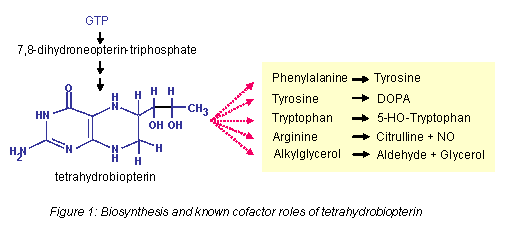
In previous work we studied the regulation of tetrahydrobiopterin biosynthesis by cytokines, pharmacological effects of tetrahydrobiopterin derivatives, and the role of tetrahydrobiopterin in the nitric oxide synthase reaction (see >>Key scientific findings, Ernst R. Werner, >>Research projects Ernst R. Werner)
Current focus
A main goal of the group is currently to study alkylglycerol (glyceryl ether) monooxygenase. We have established a novel assay for this enzyme which is 5 orders of magnitude more sensitive than previously used absorbance-based assays (1). We have developed means to monitor the fate of the product of the reaction, toxic fatty aldehydes (2) and solved the structure of the enzyme metabolizing these aldehydes (3). We assigned a sequence to alkylglycerol monooxygenase by expressing bioinformatically selected candidate genes in CHO cells (4), characterized its biochemical properties by site-directed mutagenesis (5) and demonstrateted that it has a strong impact on the murine macrophage lipidome (6). (>> more on ether lipid research)
In cooperation with the Center of Operative Medicine, Department of Visceral, Transplant and Thoracic Surgery, Innsbruck Medical University, we explore potential and mechanism of action of tetrahydrobiopterin derivatives to attenuate the ischemia-reperfusion injury harming transplanted organs (7).
References
1. Werner, E. R., Hermetter, A., Prast, H., Golderer, G., Werner-Felmayer, G. (2007) Widespread occurrence of glyceryl ether monooxygenase activity in rat tissues detected by a novel assay. J.Lipid Res. 48, 1422-1427
2. Keller, M. A., Watschinger, K., Golderer, G., Maglione, M., Sarg, B., Lindner, H., Werner-Felmayer, G., Terrinoni, A., Wanders, R. J., Werner, E. R. (2010) Monitoring of fatty aldehyde dehydrogenase by formation of pyrenedecanoic acid from pyrenedecanal. J.Lipid.Res. 51: 1554-1559
3. Keller MA, Zander U, Fuchs JE, Kreutz C, Watschinger K, Mueller T, Golderer G, Liedl KR, Ralser M, Krautler B, Werner ER, Marquez JA (2014). A gatekeeper helix determines the substrate specificity of Sjogren-Larsson Syndrome enzyme fatty aldehyde dehydrogenase. Nat.Commun. 5:4439
4. Watschinger, K., Keller, M. A., Golderer, G., Hermann, M., Maglione, M., Sarg, B., Lindner, H. H., Hermetter, A., Werner-Felmayer, G., Konrat, R., Hulo, N., Werner, E. R. (2010) Identification of the gene encoding alkylglycerol monooxygenase defines a third class of tetrahydrobiopterin-dependent enzymes. Proc.Natl.Acad.Sci.U.S.A 107: 13672-13677.
5. Watschinger, K., Fuchs, J. E., Yarov-Yarovoy, V., Keller, M. A., Golderer, G., Hermetter, A., Werner-Felmayer, G., Hulo, N., Werner, E. R. (2012) Catalytic residues and a predicted structure of tetrahydrobiopterin-dependent alkylglycerol mono-oxygenase Biochem.J. 443, 279-286
6. Tetrahydrobiopterin and alkylglycerol monooxygenase substantially alter the murine macrophage lipidome. Watschinger K, Keller MA, McNeill E, Alam MT, Lai S, Sailer S, Rauch V, Patel J, Hermetter A, Golderer G, Geley S, Werner-Felmayer G, Plumb RS, Astarita G, Ralser M, Channon KM, Werner ER, Proc.Natl.Acad.Sci.U.S.A (2015) ;doi: 10.1073/pnas.1414887112
7. Crucial Role for Neuronal Nitric Oxide Synthase in Early Microcirculatory Derangement and Recipient Survival following Murine Pancreas Transplantation.Cardini B, Watschinger K, Hermann M, Obrist P, Oberhuber R, Brandacher G, Chuaiphichai S, Channon KM, Pratschke J, Maglione M, Werner ER. PLoS.One. 2014; 9:e112570